
Mosses & Ferns
Kingdom Plantae
All Materials © Cmassengale
Seedless Nonvascular Plants
- Includes mosses, liverworts, and hornworts
- Lack vascular tissue (xylem & phloem) to carry water & food
- Have a Sporophyte & Gametophyte stage known as alternation of generations
- Gametophyte is dominant stage
- Reproduce by spores
Division Bryophyta
Mosses:
- Small, nonvascular land plants
- No true roots, stems, or leaves
- Class Musci
- Most common bryophyte
- Grow on moist areas (brick walls, as thick mats on forest floors, and on the shaded side of trees)
- Some can survive periodic dry spells & revive when H2O becomes available
- Must grow close together and must have H2O to complete their life cycle
- Sperm swims to egg through drops of water during fertilization
- H2O moves cell-to-cell by osmosis
- Sphagnum moss is known for its moisture holding capacity, absorbing up to 20 times its dry weight with water.
MOSS SPOROPHYTES & FERN GAMETOPHYTES
LIFE CYCLE OF MOSSES:
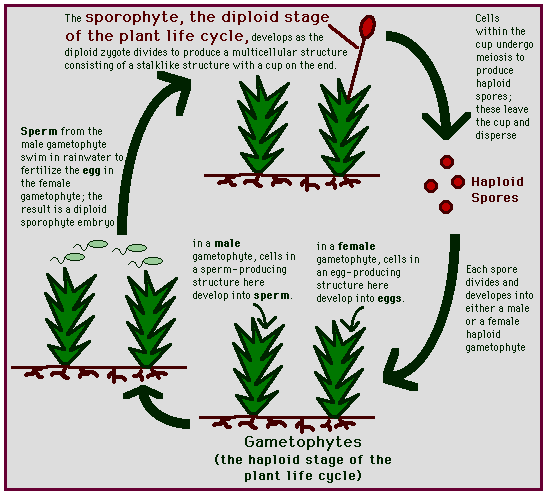
- Mosses alternate between a haploid (n) gametophyte stage & a diploid (2n) sporophyte stage
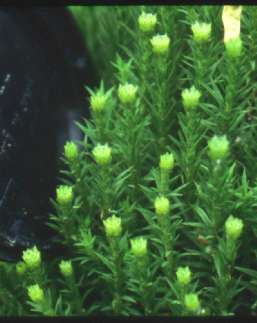
- Gametophyte is the dominant generation
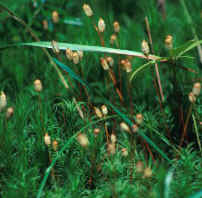
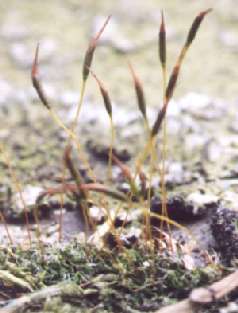
| Moss Gametophyte | Moss Sporophyte |
 |
 |
- Called alternation of generations
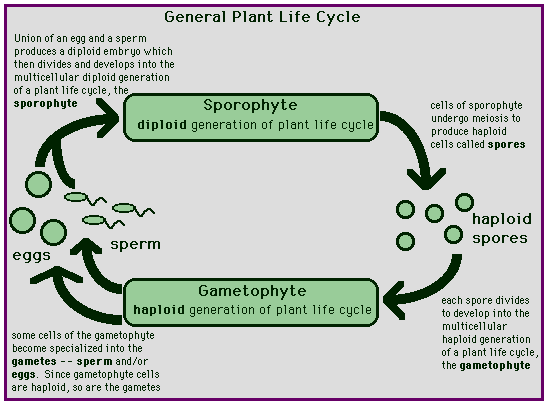
- The haploid gametophyte stage contains half the chromosome number & produces gametes (egg & sperm)
- Gametophyte stage is dominant in the moss’s life cycle
- Gametophytes are photosynthetic & have root-like rhizoids
- The diploid sporophyte has a complete set of chromosomes & produces spores by meiosis
- Sporophyte of a moss is smaller than, & attached to the Gametophyte
- Sporophytes lack chlorophyll & depend on the photosynthetic gametophyte for food
- Sporophyte has a long, slender stalk topped with a capsule
- Capsule forms haploid (n) spores
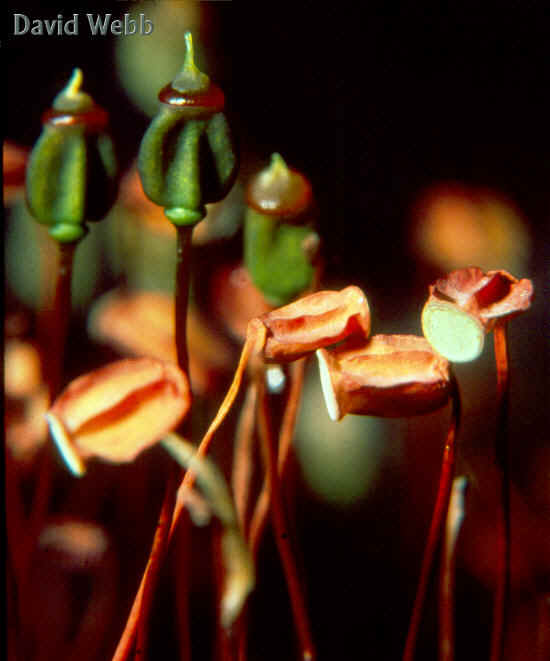
Moss Capsules
Sexual Reproduction in Moss:
- Mosses produce 2 kinds of gametes (egg & sperm)
- Gametes of Bryophytes are surrounded by a jacket of sterile cells that keep the cells from drying out
- Female gametes or eggs are larger with more cytoplasm & are immobile
- Flagellated sperm must swim to the egg through water droplets for fertilization
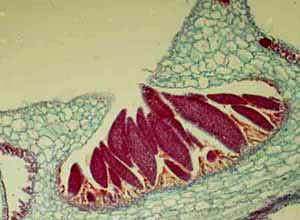
- Moss gametes form in separate reproductive structures on the Gametophyte — Archegonium & Antheridium
| Archegonium | Antheridium |
 |
 |
- Each Archegonium forms one egg, but each Antheridium forms many sperm
- Fertilization can occur only after rain when the Gametophyte is covered with water
- Sperms swim to the egg by following a chemical trail released by the egg
- A zygote (fertilized egg) forms that undergoes mitosis and becomes a Sporophyte
- Cells inside mature Sporophyte capsule undergoes meiosis and form haploid spores
- Haploid spores germinate into juvenile plants called protonema
- Protonema begin the Gametophyte generation
Protonema
- Spores are carried by wind & sprout on moist soil forming a new Gametophyte
Asexual reproduction in Mosses:
- Asexual reproduction in moss may occur by fragmentation or gemmae
- Pieces of a Gametophyte can break off & form new moss plants (fragmentation)
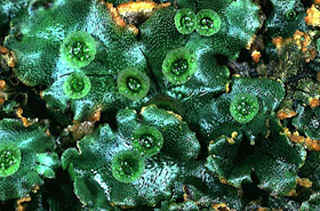
- Gemmae are tiny, cup shaped structures on the Gametophytes
- Raindrops separate gemmae from the parent plant so they can spread & form new Gametophytes
| Gemmae cups | |
 |
 |
Uses for Moss:
- Help decomposer dead logs
- Serve as pioneer plants on bare rock or ground
- Help prevent erosion
- Provide shelter for insects & small animals
- Used as nesting materials by birds & mammals
- Sphagnum or peat moss forms peat bogs (wet ecosystem)
- Peat is burned as fuel in some areas
Division Hepatophyta
Liverworts:
- Nonvascular
- Undergo alternation of generations with Sporophyte attached to Gametophyte
- Gametophytes are green & leafy and the dominant generation
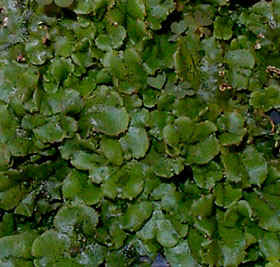
Liverwort
- Need abundant water for fertilization
- Reproduce by spores
- Grow on moist rocks or soil
- Reproduce asexually by gemmae and by growing new branches
Division Anthocerophyta
Hornworts:
- Small, nonvascular bryophytes
- Gametophyte leafy like liverworts
- Archegonia & antheridia form inside the plant
- After fertilization, zygotes develop into long, horn-shaped Sporophytes
- Horn-shaped Sporophytes capable of photosynthesis so not completely dependent on Gametophyte
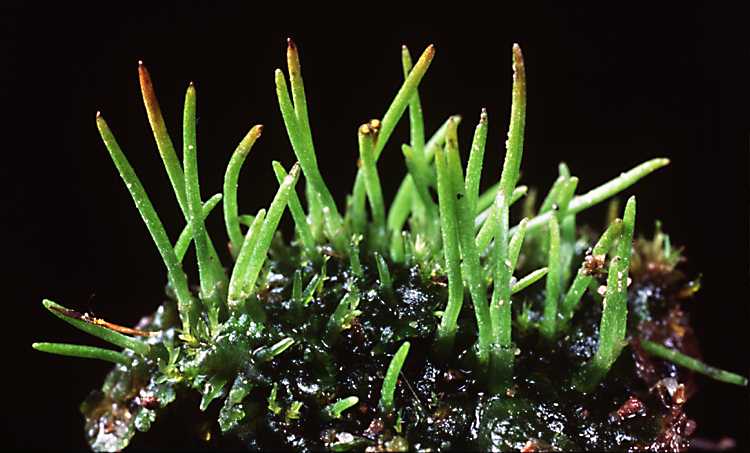
Hornwort
Seedless Vascular Plants
- Includes club mosses, whisk ferns, horsetails, & ferns
- Have specialized vascular tissues (xylem & phloem) to transport H2O, food, etc.
- Have a Sporophyte & Gametophyte stage known as alternation of generations
- Sporophyte is the dominant stage
- Reproduce by spores
Division Psilophyta
Whisk Ferns:
- Photosynthetic, aerial stem forks repeatedly to form a small twiggy bush
- No true roots, stems, or leaves
- Have horizontal, underground stems called rhizomes
- Root-like structures called rhizoids anchor plant
- Reproduce by spores & vegetatively from rhizomes
- Only 2 living genera
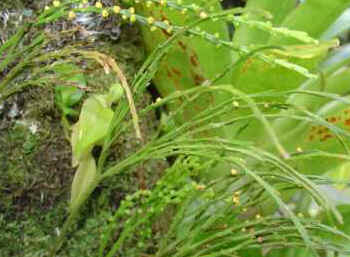
Whisk Fern
Division Lycophyta
Club Mosses:
- Low growing plants resembling pine trees
- Have a club-shaped spore producing structure
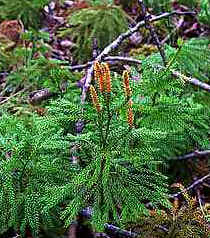
Club Moss
- Some like Lycopodium contain chemicals that burn quickly
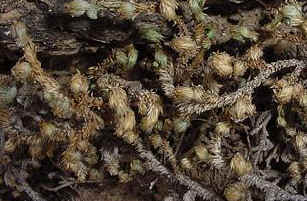
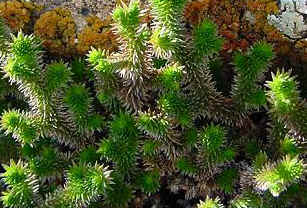
- Resurrection moss is green (after rains) when moist and brown when dry.
| Resurrection Plant | |
 |
 |
Division Sphenophyta
Horsetails:
- Equisetum called scouring rush is the only living species
- Photosynthetic aerial stems & underground rhizomes
- Stems contain silica & were once used to scrub pots
- Reproduce by means of spores made in small cones at the tip of branches
- In prehistoric times, some plants of this family grew to be large trees
- Found in wetlands
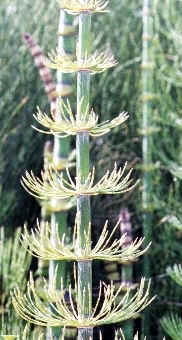
Horsetail
Division Pterophyta
Fern Gametophyte:
- Largest group of living seedless vascular plants
- Live in moist habitats
- Alternates between dominant Sporophyte stage & Gametophyte stage
- Sporophyte stage has true roots, stems, & leaves
- Produce spores on the underside of leaves

- Leaves are called fronds & are attached by a stem-like petiole
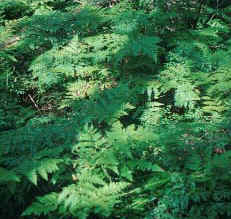
FERNS
Fern Life Cycle:
- Spores produced on underside of fronds in clusters of sporangia called sori
- Spores undergo meiosis, are spread by wind, & germinate on moist soil to form prothallus
- Prothallus begins the Gametophyte stage
- Mature Gametophytes are small, heart-shaped structures that live only a short time
- Male antheridia & female archegonia grow on the prothalli
- Sperm must swim to the egg to fertilize it & developing embryo becomes the Sporophyte generation
- Newly forming fronds are called fiddleheads & uncurl
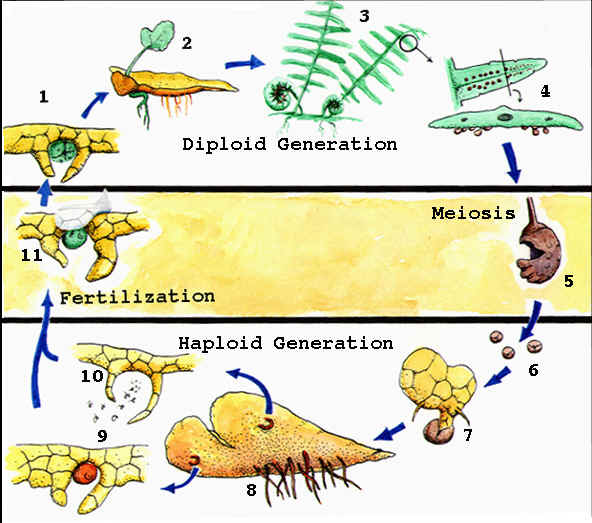
Uses for Ferns:
- Prevent erosion
- Fiddleheads serve as food
- Ornamental plants
- Formed coal million of years ago