| The Heat is On – The Energy Stored in Food |  |
||||||||||||||||||||||||||||||||||||||||||||||||||||||||||||||||
| Introduction:
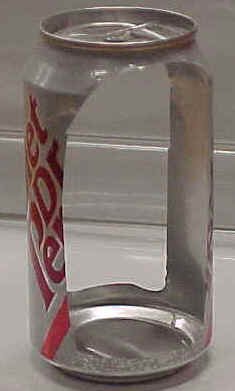
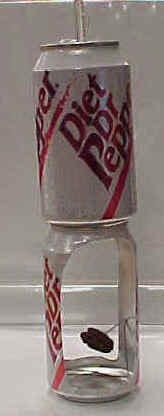
Plants utilize sunlight during photosynthesis to convert carbon dioxide and water into glucose (sugar) and oxygen. This glucose has energy stored in its chemical bonds that can be used by other organisms. This stored energy is released whenever these chemical bonds are broken in metabolic processes such as cellular respiration. Cellular respiration is the process by which the chemical energy of “food” molecules is released and partially captured in the form of ATP. Cellular respiration is the general term which describes all metabolic reactions involved in the formation of usable energy from the breakdown of nutrients. In living organisms, the “universal” source of energy is adenosine triphosphate (ATP). Carbohydrates, fats, and proteins can all be used as fuels in cellular respiration, but glucose is most commonly used as an example to examine the reactions and pathways involved. Marathon runners eat a large plate of pasta the night before a competition because pasta is a good source of energy, or fuel for the body. All foods contain energy, but the amount of potential energy stored will vary greatly depending on the type of food. Moreover, not all of the stored energy is available to do work. When we eat food, our bodies convert the stored energy, known as Calories, to chemical energy, thereby allowing us to do work. A calorie is the amount of heat (energy) required to raise the temperature of 1 gram (g) of water 1 degree Celsius (°C). The density of water is 1 gram per milliliter (1g/ml) therefore 1 g of water is equal to 1 ml of water. When we talk about caloric values of food, we refer to them as Calories (notice the capital “C”), which are actually kilocalories. There are 1000 calories in a kilocalorie. So in reality, a food item that is listed as having 38 Calories has 38,000 calories. Calories are a way to measure the energy you get from the food you eat. Just as pasta can provide a runner energy to run a marathon, a tiny peanut contains stored energy that can be used to heat a container of water. For this lab exercise, you will indirectly measure the amount of Calories in couple of food items using a calorimeter. A calorimeter (calor = Latin for heat) is a device that measures the heat generated by a chemical reaction, change of state, or formation of a solution. There are several types of calorimeters but the main emphasis of all calorimeters is to insulate the reaction to prevent heat loss. We will be using a homemade calorimeter modeled after a constant-volume calorimeter. A particular food item will be ignited, the homemade calorimeter will trap the heat of the burning food, and the water above will absorb the heat, thereby causing the temperature (T) of the water to increase. By measuring the change in temperature (∆T) of a known volume of water, you will be able to calculate the amount of energy in the food tested
Objective:
In this experiment, you will measure the amount of energy available for use from three types of nuts, a plant product. This process of measuring the energy stored in food is known as calorimetry. Materials: Procedure:
Results:
Questions & Conclusion:
|
|||||||||||||||||||||||||||||||||||||||||||||||||||||||||||||||||
| BACK | |||||||||||||||||||||||||||||||||||||||||||||||||||||||||||||||||